
Prefer to watch this as a video?
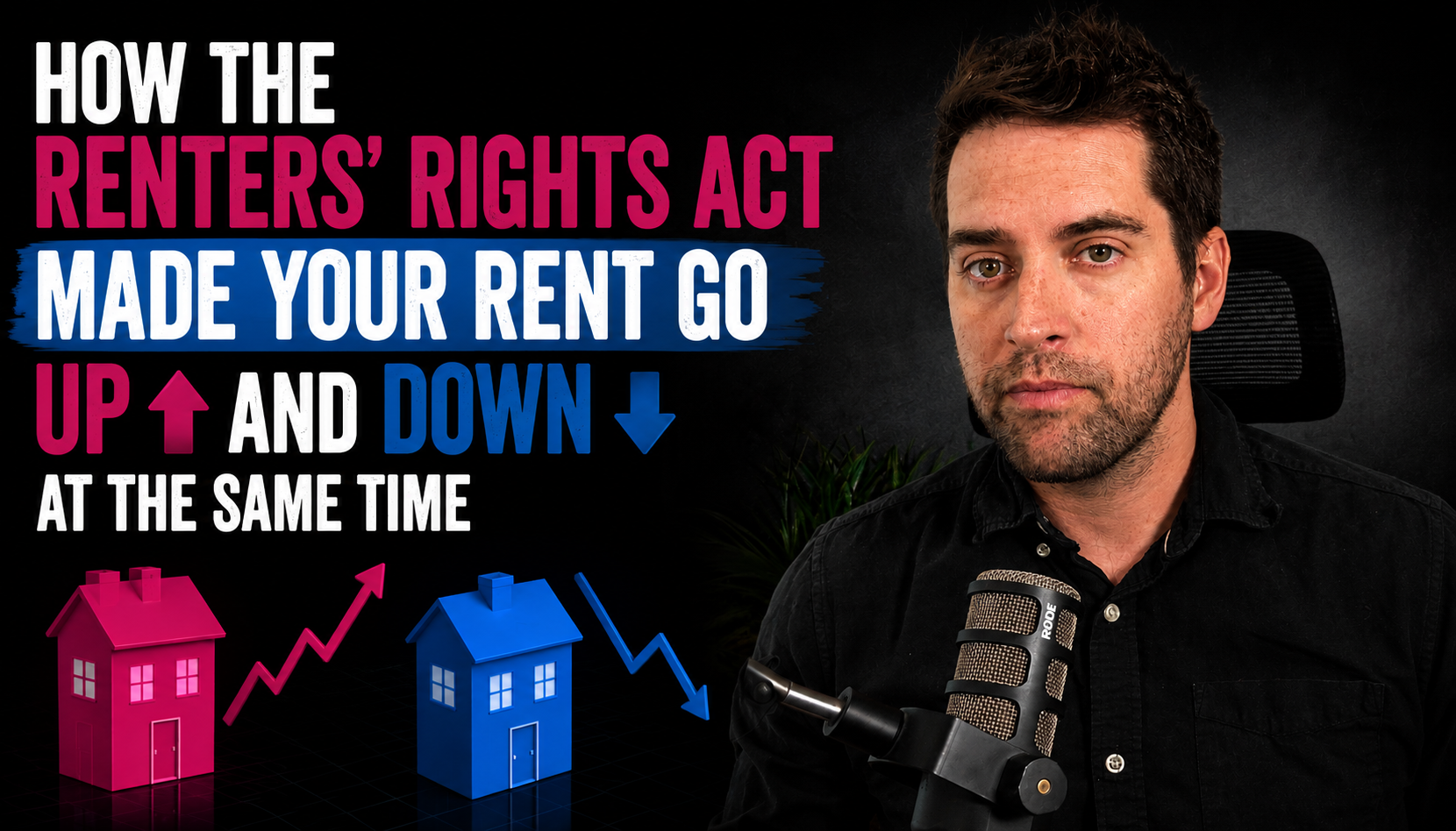
The Renters’ Rights Act has increased rents.
At the same time, rents have fallen.
At first glance, those two statements appear to contradict each other. In reality, they are both true. The confusion comes from the fact that there is no longer a single rental market. Instead, the market has split into two distinct experiences: one for tenants who move home and another for tenants who stay where they are. Understanding that split helps explain one of the most unexpected consequences of the Renters’ Rights Act.
The Old Rental Market
Before the Renters’ Rights Act, there was an unwritten agreement between landlords and tenants. If a tenant stayed in a property for several years, landlords would often leave the rent largely unchanged. Rent increases happened, but many long-term tenants benefited from below-market rents simply because they remained in place. The real increase came when a property changed hands. In 2023, new tenants were typically paying around 10% more than the outgoing tenant. Landlords would reset rents to market levels between tenancies, while existing tenants often avoided significant increases. For many renters, staying put was rewarded with stability. Moving home meant returning to current market rates.
How the Renters’ Rights Act Changed Incentives
That dynamic has changed dramatically. The Renters’ Rights Act removed rent review clauses and limited landlords to a single annual rent increase, which tenants can challenge if they believe it is excessive. As a result, landlords have become much more conscious of keeping rents aligned with market levels throughout a tenancy. Previously, if rent drifted below market rates, landlords could often correct that gap when a tenant moved out. Today, that option has largely disappeared. If landlords allow rents to fall significantly behind the market, catching up later becomes much more difficult. The result is that rent increases have shifted from new tenancies to existing ones. In 2025 and 2026, sitting tenants have been experiencing rent increases of more than 11%. Meanwhile, rents for new tenants have remained almost flat, increasing by just 0.3%. In effect, the rent increase has moved from the front door to the living room.
The Story Nobody Is Talking About
Much of the discussion around rents has focused on increases experienced by existing tenants. However, there is another side to the story. When adjusted for inflation, rents on new tenancies have actually fallen for two consecutive years. COHO analysed rental data across 77 local authority areas and found that in 72 of them, rents for new tenants failed to keep pace with inflation. In practical terms, that means rents may have appeared stable on paper, but landlords were effectively receiving less income in real terms. Some areas experienced particularly notable declines. Peterborough, Cambridge, Derby and Huddersfield all saw new-tenant rents fall by around 4% to 5% in real terms. Only a small number of locations moved in the opposite direction. Worcester, Chelmsford, Telford and Stevenage were among the few areas where rent growth exceeded inflation. For most landlords, however, flat rents in an inflationary environment amount to a gradual reduction in income.
One City, Two Different Markets
Cambridge provides perhaps the clearest example of what is happening. In the same city, during the same period, new tenants have seen rents fall by around 4% in real terms, while existing tenants have experienced rent increases of approximately 3%. The market has not moved in a single direction. It has split. Tenants entering the market are benefiting from weaker rental growth and, in some cases, lower real-terms rents. Existing tenants are facing larger annual increases as landlords try to avoid falling behind market rates. The result is a system where moving home can be financially advantageous, while staying put can become increasingly expensive.
What Does This Mean for Landlords and Tenants?
The Renters’ Rights Act was designed to provide greater protection for tenants, particularly around rent increases and security of tenure. However, the data suggests it has also changed landlord behaviour in ways that were perhaps unintended. The old model encouraged landlords to leave reliable, long-term tenants on lower rents and recover the difference when the property was re-let. The new system makes that strategy far more difficult. As a result, many landlords are now increasing rents more regularly during tenancies to avoid being left behind by the market. The outcome is a rental market that looks very different from the one that existed just a few years ago.
For tenants, the biggest rent increases are increasingly arriving while they stay put rather than when they move. For landlords, income from new tenancies is struggling to keep pace with inflation in much of the country.The market has not simply gone up or down. It has divided into two separate realities, and understanding that distinction is becoming increasingly important for both landlords and tenants.
Prefer to watch this as a video?
The Renters’ Rights Act has increased rents.
At the same time, rents have fallen.
At first glance, those two statements appear to contradict each other. In reality, they are both true. The confusion comes from the fact that there is no longer a single rental market. Instead, the market has split into two distinct experiences: one for tenants who move home and another for tenants who stay where they are. Understanding that split helps explain one of the most unexpected consequences of the Renters’ Rights Act.
The Old Rental Market
Before the Renters’ Rights Act, there was an unwritten agreement between landlords and tenants. If a tenant stayed in a property for several years, landlords would often leave the rent largely unchanged. Rent increases happened, but many long-term tenants benefited from below-market rents simply because they remained in place. The real increase came when a property changed hands. In 2023, new tenants were typically paying around 10% more than the outgoing tenant. Landlords would reset rents to market levels between tenancies, while existing tenants often avoided significant increases. For many renters, staying put was rewarded with stability. Moving home meant returning to current market rates.
How the Renters’ Rights Act Changed Incentives
That dynamic has changed dramatically. The Renters’ Rights Act removed rent review clauses and limited landlords to a single annual rent increase, which tenants can challenge if they believe it is excessive. As a result, landlords have become much more conscious of keeping rents aligned with market levels throughout a tenancy. Previously, if rent drifted below market rates, landlords could often correct that gap when a tenant moved out. Today, that option has largely disappeared. If landlords allow rents to fall significantly behind the market, catching up later becomes much more difficult. The result is that rent increases have shifted from new tenancies to existing ones. In 2025 and 2026, sitting tenants have been experiencing rent increases of more than 11%. Meanwhile, rents for new tenants have remained almost flat, increasing by just 0.3%. In effect, the rent increase has moved from the front door to the living room.
The Story Nobody Is Talking About
Much of the discussion around rents has focused on increases experienced by existing tenants. However, there is another side to the story. When adjusted for inflation, rents on new tenancies have actually fallen for two consecutive years. COHO analysed rental data across 77 local authority areas and found that in 72 of them, rents for new tenants failed to keep pace with inflation. In practical terms, that means rents may have appeared stable on paper, but landlords were effectively receiving less income in real terms. Some areas experienced particularly notable declines. Peterborough, Cambridge, Derby and Huddersfield all saw new-tenant rents fall by around 4% to 5% in real terms. Only a small number of locations moved in the opposite direction. Worcester, Chelmsford, Telford and Stevenage were among the few areas where rent growth exceeded inflation. For most landlords, however, flat rents in an inflationary environment amount to a gradual reduction in income.
One City, Two Different Markets
Cambridge provides perhaps the clearest example of what is happening. In the same city, during the same period, new tenants have seen rents fall by around 4% in real terms, while existing tenants have experienced rent increases of approximately 3%. The market has not moved in a single direction. It has split. Tenants entering the market are benefiting from weaker rental growth and, in some cases, lower real-terms rents. Existing tenants are facing larger annual increases as landlords try to avoid falling behind market rates. The result is a system where moving home can be financially advantageous, while staying put can become increasingly expensive.
What Does This Mean for Landlords and Tenants?
The Renters’ Rights Act was designed to provide greater protection for tenants, particularly around rent increases and security of tenure. However, the data suggests it has also changed landlord behaviour in ways that were perhaps unintended. The old model encouraged landlords to leave reliable, long-term tenants on lower rents and recover the difference when the property was re-let. The new system makes that strategy far more difficult. As a result, many landlords are now increasing rents more regularly during tenancies to avoid being left behind by the market. The outcome is a rental market that looks very different from the one that existed just a few years ago.
For tenants, the biggest rent increases are increasingly arriving while they stay put rather than when they move. For landlords, income from new tenancies is struggling to keep pace with inflation in much of the country.The market has not simply gone up or down. It has divided into two separate realities, and understanding that distinction is becoming increasingly important for both landlords and tenants.